Context
ClimatePartner is a B2B Climate-Tech company offering decarbonisation software and consulting services. As Head of Product Design, I co-led this initiative with the Head of Marketing between January and March 2025. The initiative had a dedicated budget of €35K plus €18K for web development. Six people participated in the core sprint across Design, Marketing, Content Strategy, and Engineering.
Starting point
ClimatePartner was perceived primarily as a carbon-offset provider. The company's shift toward decarbonisation software and advisory services was not reflected in its brand, website, or product interfaces.
Inbound leads had declined 35% year-over-year. The website did not function as a sales instrument: unclear user flows, weak calls to action, and no connection between marketing content and product entry points. Software-first competitors with clearer positioning were gaining ground as identified in the competitive analysis and external audit.
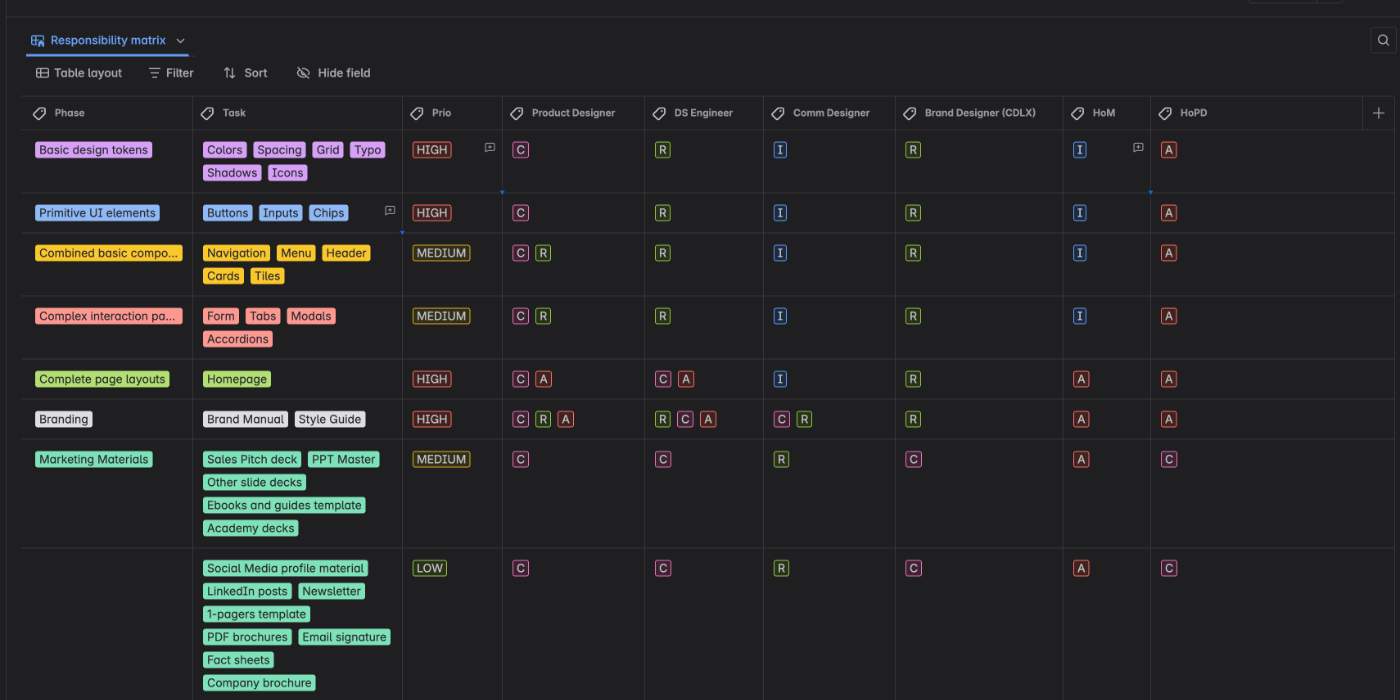
These problems were connected. The brand communicated one thing, the website another, and the product a third. Without a shared direction, each team optimised for its own metrics. Marketing focused on lead volume. Product Design focused on user experience. No governance existed to align these perspectives. This gap became visible when website ownership and decision rights between teams were unclear.
Approach
Phase 1 – Evidence Base. Competitive analysis, website audit, and marketing KPI review. An external audit (otto.grid) confirmed the positioning gap. These findings formed the business case presented to the executive team, which secured approval for the initiative.
Phase 2 – Brand Strategy. Working with external consultancy G/SO, the core strategic shift was identified: moving the brand emphasis from "Climate" to "Partner." Three messaging pillars were defined around customer impact, regulatory compliance, and long-term business value. Competitor analysis showed the market split into two interchangeable categories (climate-emotion vs. data/facts), creating an opening for differentiation through customer-benefit framing.
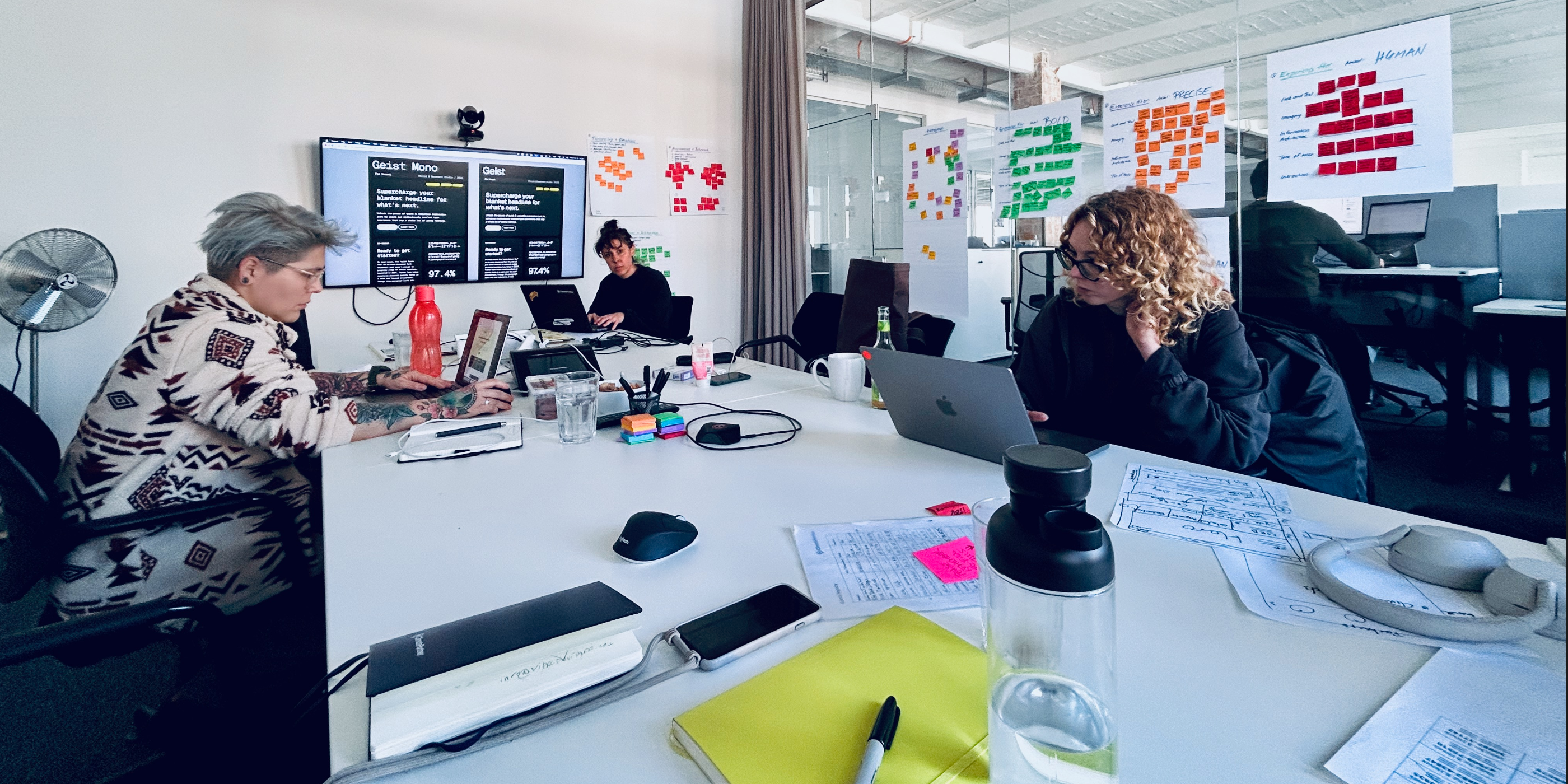
Phase 3 – Design Sprint (4 days, cross-functional). Day 1: Brand Persona, Brand Attributes (Bold, Precise, Human), and Experience Filters defined across emotional, functional, and social dimensions. Day 2: Three design directions explored via moodboards, user journeys, and content hierarchy mapping. Day 3: Design decision workshop with an 8-criteria evaluation matrix; high-fidelity prototype built. Day 4: Iteration, initial style guide, and copywriting guidelines.
Validation. A 2-day Product Design Hackathon tested the new brand direction against existing software products, checking whether the attributes translated into product interfaces.
Decisions
Framing as de-risking, not redesign. The initiative was presented to leadership as a strategic risk mitigation measure, not a visual refresh. This framing was deliberate: it secured executive buy-in and budget in an environment where "rebranding" could have been deprioritised as cosmetic.
Addressing the ownership gap through structure. Rather than escalating the misalignment between Marketing and Product Design, the sprint format was designed to create shared artefacts and evaluation criteria. This did not resolve the underlying governance gap, but it produced a common reference point for decisions.
Scope boundary. The initiative defined brand direction and validated it against products, but deliberately stopped before implementation. The rationale: committing to implementation without a shared website governance model would have reproduced the original problem.
Results
Delivered: Brand Persona, three Brand Attributes with sub-attributes, Experience Filters, evaluation matrix, high-fidelity website prototype, initial style guide, and copywriting guidelines (evidence: high – artefacts documented).
Validated: Brand direction tested across software products via hackathon (evidence: high – documented in project records).
Baseline metrics documented (not post-launch outcomes): Baseline marketing metrics were documented (e.g., 60% conversion on optimised pages, 35% YoY lead decline). These are pre-initiative baselines, not post-launch outcomes.
Not achieved: Post-launch impact measurement. The website redesign sprint was planned but not executed within the documented period. Governance alignment between Marketing and Product Design remained an open workstream beyond the project scope.
Learnings
Validating brand direction against existing products before committing to a website redesign was the right sequence. It prevented the common failure mode of launching a new brand that the product cannot deliver on. The trade-off: it added time before visible external change.
Cross-functional assets like a company website sit at the boundary of multiple teams. Without explicit governance, ownership conflicts are structural, not personal. The sprint created alignment on direction, but alignment on direction is not the same as alignment on decision rights.
Framing matters. Presenting the initiative as risk mitigation rather than design improvement changed the conversation with leadership. The business case was built on market data, not design rationale. This made approval faster but also meant the initiative was evaluated on business terms – terms on which post-launch evidence is still missing.